
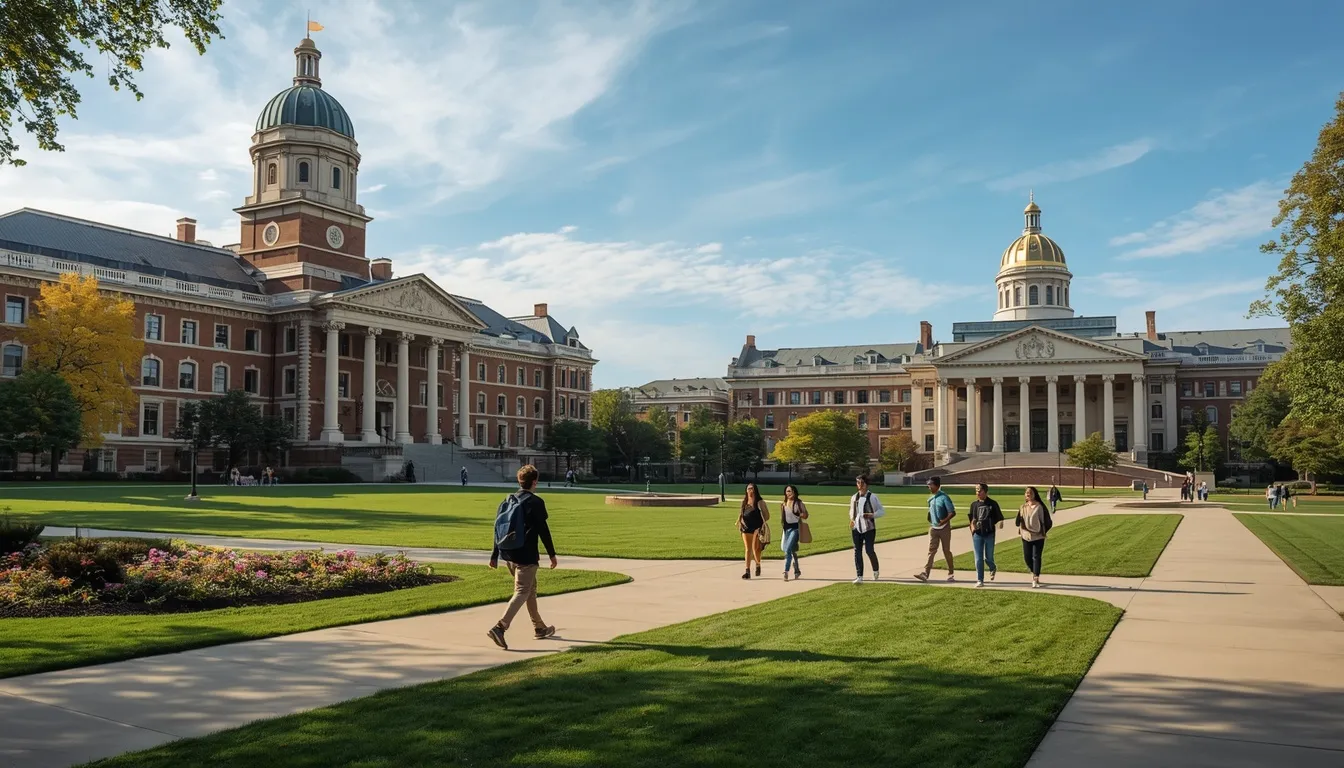
Top 100 Universities in USA: A Guide for Students
Choosing a university is a big step. It can shape your skills, career, friends, and future. If you plan to study abroad, the top 100 universities in USA can give you many strong options.
The United States is home to many famous universities. These schools offer strong courses, modern labs, skilled teachers, and rich campus life. They also attract students from many parts of the world.
This guide looks at the Top universities in USA using the ranking information provided. It also explains what makes US universities special and what students should think about before applying.
Why Are US Universities So Popular?
US universities are known for their wide range of study options. A student can often choose from many majors, minors, and research areas. This gives students more freedom to shape their education.
Another major benefit is the mix of students. A campus may have students from many countries and cultures. This can turn a simple classroom into a small global community.
Many universities also focus on research and new ideas. Students may get access to labs, libraries, internships, clubs, and career services. These experiences can be useful long after graduation.
Top 10 Universities in the USA
The highest-ranked names in the supplied data include some of the most well-known universities in the world. They are spread across different states and offer different academic strengths.
| Rank | University | Location |
| 1 | Massachusetts Institute of Technology (MIT) | Massachusetts |
| 2 | Stanford University | California |
| 5 | Harvard University | Massachusetts |
| 7 | California Institute of Technology (Caltech) | California |
| 15 | University of Pennsylvania | Pennsylvania |
| 16 | Cornell University | New York |
| 16 | Yale University | Connecticut |
| 20 | Johns Hopkins University | Maryland |
| 20 | University of California, Berkeley | California |
| 24 | University of Chicago | Illinois |
| The rank numbers above follow the supplied ranking information. They should not be treated as a single universal ranking system because university rankings can change by year and by ranking body. |
-
Massachusetts Institute of Technology
Massachusetts Institute of Technology, often called MIT, is known for science, technology, and innovation. It has a strong focus on research and problem solving.
For students who enjoy engineering, computer science, mathematics, or technology, MIT can be an exciting name to explore. Its global reputation also makes it one of the most recognized universities in the top 100 universities in USA.

- Stanford University
Stanford University is located in California near the heart of Silicon Valley. The university has strong links with technology, business, science, and innovation.
Its location is also a major attraction. Students can be close to one of the world’s best-known technology hubs while studying in a large research university.
- Harvard University
Harvard University is one of the oldest and most famous universities in the United States. It offers a wide range of academic programs.
Students may find opportunities across areas such as business, law, medicine, social science, arts, and science. Its long history and global alumni network add to its appeal.
- California Institute of Technology
California Institute of Technology, known as Caltech, has a strong focus on science and engineering. The school is smaller than many major US universities.
That smaller setting can be useful for students who enjoy close academic work. Research is also a major part of the university experience.
- University of Pennsylvania
The University of Pennsylvania is a private research university in Philadelphia. It is known for combining different areas of study.
Students interested in business, health, social science, engineering, and other fields can explore a wide range of programs. Its urban setting also gives students access to a major US city.
- Cornell University
Cornell University is located in New York State. It has a broad academic structure with programs across many fields.
From engineering and agriculture to business and arts, Cornell gives students many study choices. This wide range makes it a useful option for students with mixed interests.
- Yale University
Yale University is based in New Haven, Connecticut. It is known for its long academic history and strong programs across many fields.
The university also has a major role in research and higher education. Students can explore subjects ranging from humanities to science and professional studies.
- Johns Hopkins University
Johns Hopkins University is based in Baltimore, Maryland. It is especially well known for research and medical education.
The university also offers programs in areas such as public health, engineering, international studies, and other disciplines. Its research culture can appeal to students who want to work on real-world problems.
- University of California, Berkeley
The University of California, Berkeley is one of the best-known public research universities in the United States. It is located in the San Francisco Bay Area.
Berkeley offers many academic choices. It is also known for research, innovation, and a strong student community.
- University of Chicago
The University of Chicago is a private research university in Illinois. It has a strong academic culture and places value on critical thinking.
Students who enjoy asking questions and exploring ideas may find its learning style interesting. The university offers programs across many major fields.
Universities Ranked 11 to 25
The list does not stop with the first ten. Many other US universities have strong global reputations and offer different academic experiences.
Here are several universities that appear in the next group of the supplied ranking data:
| Rank | University |
| =43 | Columbia University |
| =45 | Northwestern University |
| 49 | University of California, Los Angeles (UCLA) |
| 51 | University of Michigan-Ann Arbor |
| 55 | Carnegie Mellon University |
| 58 | New York University (NYU) |
| 66 | Brown University |
| 70 | Duke University |
| 72 | University of Texas at Austin |
| 72 | University of Illinois Urbana-Champaign |
| 81 | University of California, San Diego |
| =92 | Pennsylvania State University |
| =92 | University of Washington |
| 94 | Boston University |
| =100 | Purdue University |
| These universities show how varied the Top universities in USA can be. Some are known for technology and engineering, while others have strong programs in business, medicine, arts, or social science. |
What Makes These Universities Different?
There is no single type of student who belongs at a top university. One student may want a large public campus. Another may prefer a small private college.
Location also matters. A university in New York can offer a very different lifestyle from one in Texas, California, or Massachusetts.
Before choosing a school, think about your own goals. A famous name is useful, but the right course, cost, location, and student support can matter just as much.
Key Things to Check Before Applying
Before you apply to any university, make a simple checklist. It can save time and help you avoid costly mistakes.
- Tuition and total cost: Check tuition, housing, food, insurance, and other fees.
- Scholarships: Look for university scholarships and other financial aid.
- Course options: Make sure your preferred major is available.
- Admission rules: Check academic, language, and test requirements.
- Location: Think about weather, transport, safety, and daily living.
- Career support: Check internships, job services, and alumni networks.
- Campus life: Look at clubs, sports, housing, and student activities.
Why Study at a Top US University?
Studying in the United States can offer more than a classroom education. Many universities combine lectures with projects, research, group work, and practical learning.
Students can also meet people from different countries. These friendships may later become professional connections. In a world where work often crosses borders, that experience can be valuable.
Another benefit is access to modern facilities. Depending on the university and course, students may use research labs, libraries, technology centers, studios, or other specialist facilities.
Research and Innovation
Research is a major part of many universities on this list. Students may have chances to work with professors or join research projects.
This can be especially useful for students planning to study science, engineering, medicine, technology, or other research-based subjects. It can also help students learn how to solve problems in a clear and practical way.
For many students, university is not only about passing exams. It is about learning how to think, test ideas, and build something useful.
International Students and Campus Life
The US attracts students from around the world. This creates campuses with many languages, cultures, and traditions.
For an international student, this can be both exciting and challenging. You may try new food, meet people with different views, and learn new ways of communicating.
Campus life can also include sports, student clubs, cultural groups, volunteer work, and academic organizations. These activities can help students feel more connected to their new home.
Choosing the Right University
The top 100 universities in USA can be a useful starting point, but rankings should not be your only guide. A university may have a high overall rank but may not be the best match for your chosen subject.
For example, a student interested in computer science may focus on technology programs and research. A future doctor may care more about medical education and research facilities.
Think of a university ranking as a map. It can show you where to look, but you still need to decide which road fits your journey.
Final Tips Before You Apply
Start your research early. Make a list of universities and compare them side by side.
Check the official admission page of each university before making a final decision. Requirements, fees, deadlines, scholarships, and programs can change.
Also, do not apply only because a university has a famous name. Look at the full picture. Your course, budget, goals, location, and personal comfort all matter.
In the next half of this guide, we will cover more universities from the supplied list, explain study benefits in greater detail, discuss important admission factors, and answer common questions about the top 100 universities in USA.
More Leading Universities in the USA
The United States has many universities beyond the first group. Several schools in the supplied list have strong academic programs, research centers, and large student communities.
Here are more names students may want to explore:
| Rank in supplied data | University |
| 122 | Rice University |
| 131 | University of Wisconsin-Madison |
| 137 | University of California, Davis |
| 142 | Georgia Institute of Technology |
| 153 | University of Southern California |
| 158 | University of North Carolina at Chapel Hill |
| 162 | Washington University in St. Louis |
| 169 | Texas A&M University |
| 172 | Arizona State University |
| 173 | University of California, Santa Barbara |
| 182 | Michigan State University |
| 183 | Emory University |
| 201 | The Ohio State University |
| 228 | University of Florida |
| 252 | University of California, Irvine |
| The exact position of a university can vary between ranking systems and years. So students should use rankings as one research tool, not as the only measure of quality. |
Strong Public Universities to Explore
Public universities are an important part of US higher education. They often have large campuses and many academic programs.
Some examples from the supplied list include the University of Michigan, University of Washington, University of Texas at Austin, Penn State, University of Maryland, and University of Minnesota.
Public universities may also have a large student population. This can mean more clubs, courses, research groups, sports, and campus events.
However, costs can differ for local and international students. Always check the current tuition and fee rules before applying.
Universities Known for Technology and Engineering
Students interested in technology have many options in the United States. Schools such as Carnegie Mellon University, Georgia Institute of Technology, Purdue University, and Illinois Institute of Technology are names worth researching.
Technology programs can cover computer science, software, artificial intelligence, data science, robotics, electrical engineering, and other fields.
Your choice should depend on the exact course. Look at the subjects, labs, research work, internship options, and career support rather than focusing only on the university’s overall position.
Universities With Strong Research Opportunities
Research can make a major difference in the university experience. Students who want to continue into a master’s degree, PhD, medicine, or research career may want to explore universities with strong research activity.
Schools such as Johns Hopkins University, Harvard University, Stanford University, MIT, University of California, Berkeley, and University of Chicago have major research communities.
Research can also teach skills that are useful outside academia. Students learn to study evidence, test ideas, solve problems, and explain their findings.
Popular Universities in California
California is home to several universities in the supplied list. The state also offers a mix of large cities, technology hubs, coastal areas, and diverse communities.
Some well-known names include Stanford University, Caltech, UC Berkeley, UCLA, UC San Diego, UC Davis, UC Irvine, UC Santa Barbara, and USC.
California can be attractive for students interested in technology, business, science, entertainment, and research. But living costs can be high in some areas, so students should plan their budget carefully.
Popular Universities in New York
New York offers several major higher education options. The state combines large cities with traditional college towns.
Universities in the supplied list include Cornell University, Columbia University, New York University, University at Buffalo, Stony Brook University, and Rensselaer Polytechnic Institute.
New York City can offer access to companies, cultural events, and professional networks. Other parts of the state can provide a quieter campus setting.Rin Book
Popular Universities in Texas
Texas has several large universities with broad academic programs. The supplied list includes University of Texas at Austin, Texas A&M University, and University of Texas at Dallas.
Texas universities can be attractive to students who want large campuses and many subject choices. The state also has major business and technology centers.
Before choosing a Texas university, compare the course structure, total cost, campus location, housing, and career services.
Scholarships and Financial Aid
The cost of studying in the United States can be a major concern. Tuition is only one part of the total budget.
Students should also consider housing, food, transport, health insurance, books, personal expenses, and travel. A simple budget can help you understand the real cost.
Some universities offer scholarships or financial aid to eligible students. International students should check each university’s rules because funding options can differ greatly.
What International Students Should Prepare
International students usually need to prepare more documents than local applicants. Requirements depend on the university and the program.
A typical application may ask for academic records, English-language proof, recommendation letters, a personal statement, and other documents. Some programs may have extra requirements.
It is wise to keep digital copies of important documents. Start early because preparing applications, financial documents, and visa paperwork can take time.
English Language Requirements
Many international students need to prove their English ability. Universities may accept tests such as IELTS or TOEFL, depending on their current rules.
The required score can vary by university, program, and degree level. Some schools may also accept other forms of English proof.
Never assume that one score works for every university. Check the current requirement for your exact course before submitting an application.
How to Compare the Top Universities in USA
A ranking can give you a quick overview, but a good comparison needs more detail. Make a small table for your favorite universities.
Compare these areas:
- Course and major
- Tuition and living cost
- Scholarship options
- Admission requirements
- Location and climate
- Research opportunities
- Internships and career services
- Campus and student life
This approach can make a long university list much easier to understand. It also helps you focus on what matters to your own future.
Ranking Is Not Everything
A high ranking can look impressive, but it does not automatically mean that a university is right for every student. Different ranking systems use different methods.
One ranking may give more weight to research. Another may consider academic reputation, employment, international activity, or other measures.
That is why students should look beyond the number. A university that matches your course, budget, learning style, and career plan may be a better personal fit.
Career Opportunities After Graduation
One reason students consider the top 100 universities in USA is the range of career opportunities that may follow graduation. Many universities have career offices that help students prepare for the job market.
Career services may include CV support, interview practice, career fairs, job boards, and internship guidance. Some universities also have large alumni networks.
Still, your career depends on many factors. Your skills, degree, experience, communication, internships, and job market all play a role.
Internships and Practical Experience
Classroom learning is important, but practical experience can make your education more useful. Internships can help students understand how their field works in the real world.
For example, a computer science student may work on software projects. A business student may gain experience in marketing or finance. A science student may join a research team.
When comparing universities, look for internship support and links with employers. These opportunities can help you build skills before graduation.
Campus Life in the USA
University life is not only about lectures and exams. Many US campuses have student clubs, sports teams, cultural groups, events, and volunteer programs.
These activities can help students make friends and become more comfortable in a new country. They can also build communication and teamwork skills.
For international students, campus activities can be a good way to meet people outside the classroom. A balanced university life can make the study period more memorable.
How to Make Your Final Choice
Start with a broad list. Then remove schools that do not match your budget, course, location, or admission profile.
Next, compare your remaining choices carefully. Read the course details and check the university’s current admission information.
Finally, think about where you can learn and live comfortably. The best university search is not about finding one famous name. It is about finding a place that supports your goals.
Final Thoughts on the Top 100 Universities in USA
The top 100 universities in USA offer students many different paths. Some are famous for technology and research. Others have strong programs in business, medicine, arts, social science, or engineering.
The supplied ranking data includes universities from many states and academic backgrounds. This shows how broad the US higher education system is.
If you are planning to study in America, take your time. Compare courses, costs, scholarships, location, student support, and career options before making a decision.
A university is more than a name on a ranking list. It is where you may spend some of the most important years of your life. Choose with care and focus on the future you want to build.
Frequently Asked Questions
1. What are the top universities in USA?
The Top universities in USA include globally known institutions such as MIT, Stanford, Harvard, Caltech, Yale, Princeton, Columbia, Cornell, UC Berkeley, and the University of Chicago. The exact order can change depending on the ranking system and year.
2. Which university is best for international students?
There is no single choice that is ideal for every international student. Students should compare their preferred subject, tuition, scholarships, location, admission rules, and support services.
3. How much does it cost to study in the USA?
Costs vary widely by university, degree, location, and lifestyle. Students should include tuition, housing, food, insurance, transport, books, and personal expenses when preparing a budget.
4. Can international students get scholarships in the USA?
Yes, some US universities offer scholarships or other forms of financial support to international students. Eligibility and award amounts differ, so students should check each university’s current funding rules.
5. Do US universities require IELTS or TOEFL?
Many universities require proof of English ability from international applicants, but rules differ. Some schools accept IELTS or TOEFL, while others may accept alternative forms of proof.
6. Is university ranking important when choosing a college?
Rankings can help students create a shortlist, but they should not be the only factor. Course quality, cost, location, research, internships, and career support may be more important for a particular student.
7. Which US universities are strong in technology?
Students interested in technology can explore universities such as MIT, Stanford, Carnegie Mellon University, Georgia Tech, Purdue University, UC Berkeley, and other schools with strong technology and engineering programs.
8. How should I choose from the top 100 universities in USA?
Start with your intended subject and budget. Then compare admission requirements, scholarships, location, campus life, research, internships, and career services. This will help you create a shortlist that fits your own goals.
Conclusion
Studying at one of the top 100 universities in USA can be an exciting step for students from around the world. The country offers a huge range of courses, campuses, research areas, and career paths.
But a famous university name should not be the only reason you apply. Take time to understand the course, total cost, admission rules, student support, and life on campus.
With careful research and a clear plan, you can narrow a very long list into a few realistic choices. Your goal is not simply to enter a highly ranked university. It is to find a university where you can learn, grow, and prepare for the career you want.